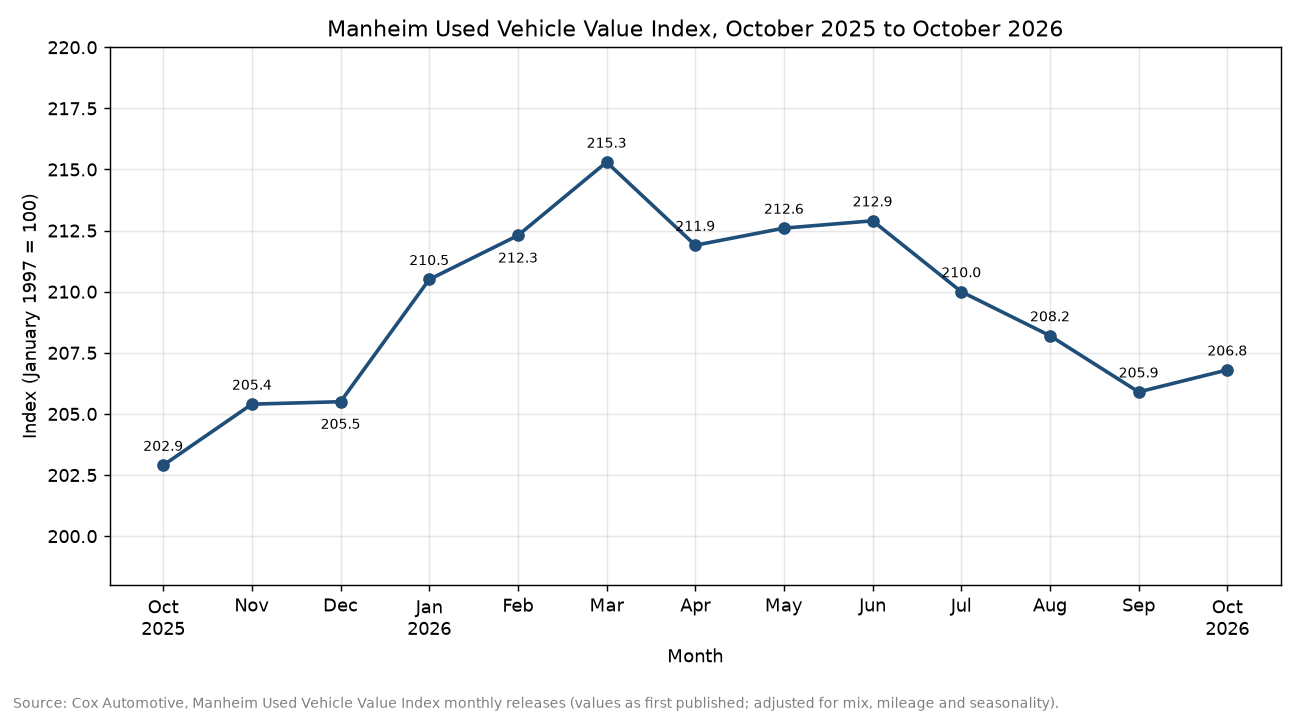
New-vehicle prices set a record in October even as supply built up unevenly, which points to more incentive and payment work on some lots. Kelley Blue Book put the average transaction price at $51,109, up 2.1% from a year earlier, with incentives at 6.8% of the price, or about $3,490. Cox counted 2.92 million new vehicles in stock, or 87 days' supply. Toyota had 39 days, while Jeep had 159, Ram 148 and Dodge 147. Cox estimates October's selling rate at 15.5 million, down from September and below its own forecast, with retail sales up only 0.6% while fleet rose 5.7%. On the used side, CarGurus says listings reached their highest level since COVID, up 4.8% from a year earlier, with vehicles three years old or newer supplying about 60% of the gain. The Manheim wholesale index rose to 206.8, up 2% from a year earlier.
Why it ranks: Price, supply and the retail-versus-fleet mix shape gross, incentives and how many payment-sensitive buyers reach the F&I office.
Possible industry effect: Stores with heavy domestic inventory may lean more on incentives and payment structure, while Toyota and Honda stores still sell from thinner stock. More late-model used supply could mean more competing listings for the same buyer.
13 months, October 2025 to October 2026. Values as first published by Cox Automotive; adjusted for mix, mileage and season.
Ranked recap of the week of Nov. 9–13, 2026. Sources rechecked Nov. 14, 2026 CT. Car-Mart and Toyota recall items include developments after the original reports.