1. Credit is easier to get just as more borrowers fall behind
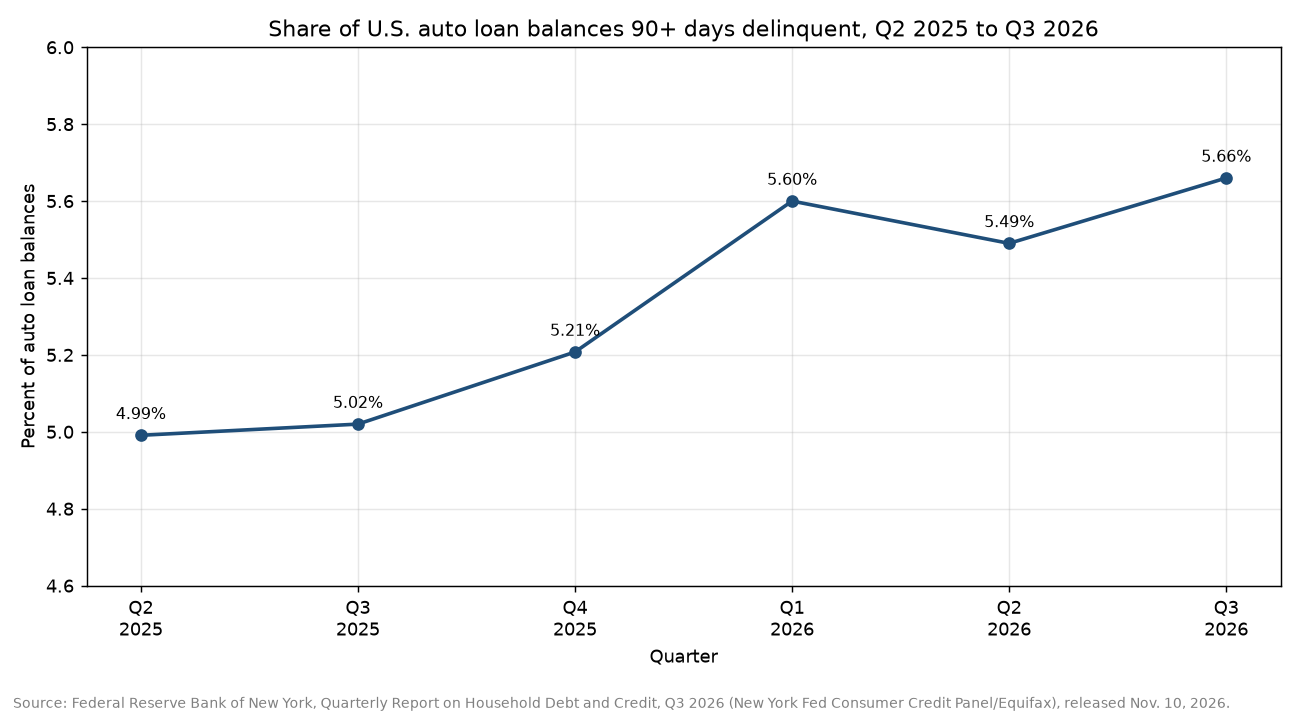
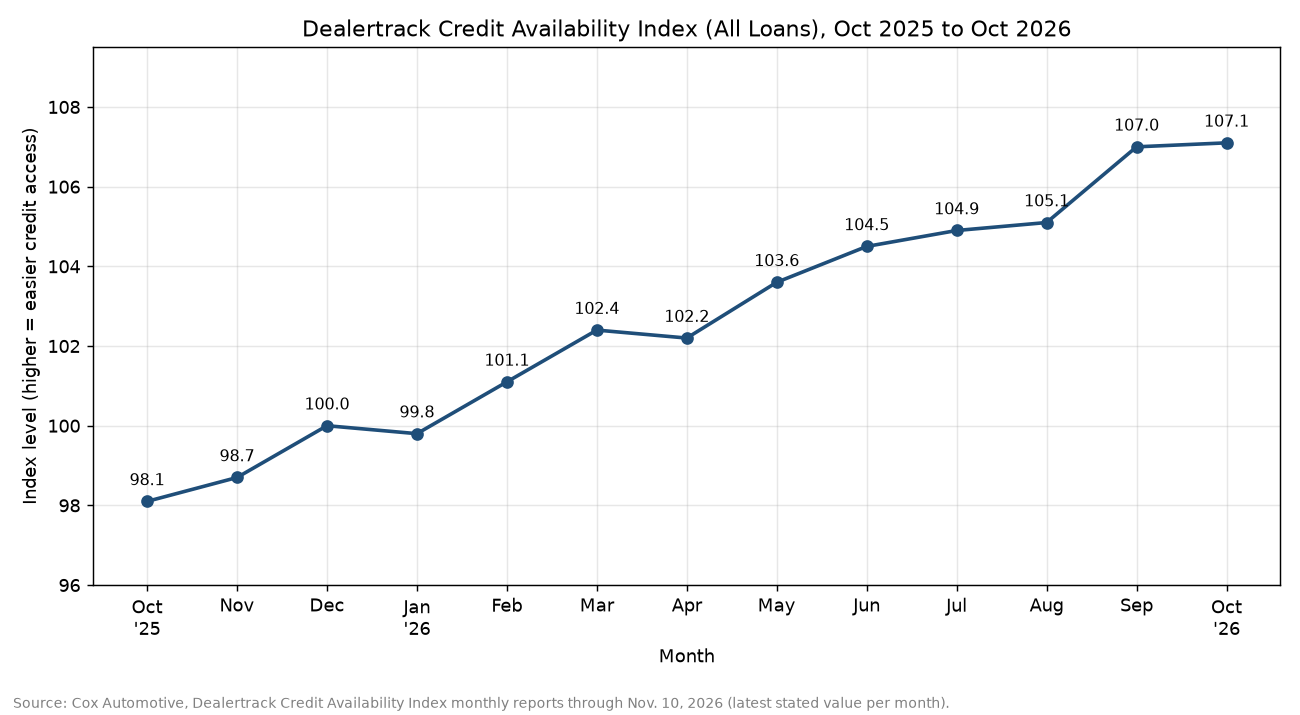
Auto credit loosened again in October while seriously late auto debt reached a new high, a mix that puts more pressure on deal structure. The New York Fed says 5.66% of U.S. auto-loan balances were 90 or more days delinquent in the third quarter, up from 5.49% in the second quarter and 5.02% a year earlier, the highest in its data going back to 2003. The annualized share of balances newly turning seriously delinquent was 3.02%, versus 2.99% a year earlier. At the same time, Cox Automotive's Dealertrack Credit Availability Index rose to 107.1 in October, its highest reading since April 2015 and 8.9% above a year earlier. The approval rate rose to 73.9%, partly because a near-prime lender with a low approval rate left the market, the average contract rate rose to 11.46%, and 58.7% of loans carried negative equity, up from 53.8% a year earlier. Commercial banks' average 60-month new-car rate was 7.54% in the Federal Reserve's August survey, up from 7.14% in May. With more trades underwater and more borrowers behind, more deals may bump against lender advance limits, which leaves less room for optional products.
Why it ranks: It touches nearly every financed deal: approvals, rate, advance and how much room is left in the payment.
Possible industry effect: If late payments keep climbing, lenders could slow the loosening that has run for six straight months, which may mean more stipulations and larger down-payment requests on the weakest files.
Six quarters, Q2 2025 to Q3 2026. New York Fed Consumer Credit Panel/Equifax, released Nov. 10, 2026.
13 months, October 2025 to October 2026. Latest Cox-stated value for each month; higher means easier credit access.
Ranked recap of the week of Nov. 9–13, 2026. Sources rechecked Nov. 14, 2026 CT. Car-Mart and Toyota recall items include developments after the original reports.